Is Pimple Nilakh Good for Investment in 2026? ROI, Rental Yield & Risks
By The 24K Lifestyle Team | Last Updated: August 29, 2026
Table of Content
Pimple Nilakh has several characteristics property investors typically evaluate: proximity to West Pune's employment corridors, established residential infrastructure, premium housing supply and access to Baner, Aundh, Balewadi and Hinjewadi. But whether it represents a suitable investment in 2026 depends on the purchase price, achievable rent, holding costs, project selection and investment horizon.
This guide evaluates Pimple Nilakh from an investment perspective using current property-price context, rental economics, demand drivers and potential risks. It should be read as a framework for evaluating an investment rather than a prediction of future returns.
For detailed current price data, see our Pimple Nilakh Property Prices 2026 guide.
Pimple Nilakh Investment Snapshot - 2026
| Factor | What investors should evaluate |
|---|---|
| Current property prices | See our Pimple Nilakh Property Prices 2026 guide for current per-sq-ft data by project |
| Rental demand | Employment-led, driven primarily by proximity to the Hinjewadi and Baner-Balewadi corridors |
| Rental yield | Calculate from verified achievable rent against actual acquisition cost, not the advertised price alone |
| Capital appreciation | Historical asking-price observation only; not a guarantee of future performance |
| Employment access | Baner-Balewadi and Hinjewadi corridors, both within a few kilometres |
| Project selection | Price, construction status, configuration, developer track record, RERA registration |
| Key risks | Entry price, construction timeline, new supply, vacancy, transaction costs |
What Makes Pimple Nilakh Relevant to Property Investors?
Pimple Nilakh sits between several established West Pune corridors: Aundh, Baner, Balewadi and Hinjewadi are all within a short distance. The locality has a maturing stock of residential projects, existing schools, hospitals and retail, and reasonable road access to nearby employment hubs. These are the kinds of factors investors commonly weigh when assessing a locality, but none of them by itself demonstrates that a specific purchase will perform well. That depends on what is paid for a unit, what rent it can realistically command, and how long the investment is held.
What Can Drive Rental Demand in Pimple Nilakh?
Rental demand in Pimple Nilakh is primarily linked to its proximity to the Hinjewadi IT corridor and the Baner-Balewadi commercial belt. The locality's proximity to these employment corridors can support rental demand from households working across West Pune, though the strength of that demand varies by configuration, project quality and competing rental supply nearby.
Factors that typically affect how easily a unit can be rented include the configuration relative to local demand (2 BHK and 3 BHK are the most commonly sought), the project's amenities and maintenance standard, its distance from the employment corridors it serves, and how much comparable rental inventory exists in the same micro-market at the same time. A locality with strong employment access can still see soft rental demand for a specific project if supply outpaces tenant demand for that configuration.
How Is Rental Yield Calculated?
Gross rental yield is the standard starting metric for evaluating a rental property, calculated as:
Gross rental yield = (Annual rent ÷ Property purchase price) × 100
Using representative figures from current Pimple Nilakh listings (see our Pimple Nilakh Property Prices 2026 guide, which lists an indicative asking rent of approximately Rs 28,000-45,000 per month for a typical 3 BHK), a worked example looks like this:
| Input | Illustrative figure |
|---|---|
| Property purchase price | Rs 1.2 Cr |
| Monthly rent | Rs 35,000 |
| Annual rent (Rs 35,000 x 12) | Rs 4,20,000 |
| Gross yield (Rs 4,20,000 ÷ Rs 1.2 Cr × 100) | 3.5% |
This is an illustrative calculation using representative price and rent figures, not a specific transaction. Run the same formula using the actual purchase price and a realistically achievable rent, based on comparable leased properties rather than asking rents alone, for any unit you are evaluating.
Gross yield also does not account for maintenance charges, vacancy periods, brokerage, repairs, property tax, financing cost or acquisition costs such as stamp duty and registration. A property with a higher gross yield is not automatically the better investment once these costs are factored in.
What Can Influence Property Values?
Several factors can affect capital values in Pimple Nilakh over time, though none of them guarantees a specific outcome:
- Entry price relative to comparable projects at the time of purchase
- New supply entering the market, which can affect both pricing power and resale competition
- Infrastructure completion, as distinct from infrastructure that is merely planned or under construction
- The project's construction status and execution track record
- Broader trends in the Pune residential market, not just the local micro-market
- Prevailing interest rates and credit conditions, which affect buyer demand
- Project-level factors such as maintenance quality, amenity upkeep and developer reputation over time
None of these factors, individually or together, guarantees that prices will rise. They are the variables worth understanding before assuming a locality's past price trend will continue unchanged.
What Are the Risks of Investing in Pimple Nilakh?
High entry price. A strong locality does not automatically make a good investment if the specific unit is purchased at an excessive premium to comparable inventory.
Rental yield compression. If capital values rise faster than achievable rents, gross yield falls even as the property's paper value increases.
Under-construction risk. Possession timelines can shift, and holding costs accrue while a project is still being built. Execution track record matters as much as the sales pitch.
Supply competition. New premium inventory entering the market can compete for the same buyer and tenant pool, affecting both resale value and achievable rent.
Vacancy and tenant turnover. Gross rental calculations should not assume twelve months of uninterrupted occupancy every year. Vacancy periods reduce actual realised yield.
Transaction costs. Stamp duty, registration, brokerage, ongoing maintenance and eventual selling costs all reduce the net return on a purchase, and are easy to leave out of a back-of-envelope calculation.
Infrastructure uncertainty. Planned infrastructure should not be priced into an investment decision as though its completion and impact on values are guaranteed. Projects can be delayed, rerouted or scaled back.
End-User vs Investor: How Does the Decision Differ?
| Buyer type | Key consideration |
|---|---|
| End-user | Commute, schools, layout, amenities, possession timeline |
| Long-term investor | Entry price, achievable rent, holding period, resale liquidity |
| Rental-income investor | Achievable rent versus total acquisition cost, not just gross yield |
| Under-construction buyer | Construction status, RERA timeline, financing and holding cost during construction |
These priorities can conflict. A layout that suits an end-user's lifestyle may not be the configuration with the strongest rental demand, and a project priced for long-term appreciation may carry a lower gross yield than an older, more modestly priced building.
How Should You Evaluate a Pimple Nilakh Property Investment?
Step 1 - Calculate total acquisition cost. Use the full cost of the purchase, not just the advertised property price: stamp duty, registration, brokerage and any other one-time charges.
Step 2 - Estimate realistic annual rent. Base this on comparable leased properties in the same project or micro-market, not on asking rents alone, which tend to run higher than achieved rents.
Step 3 - Calculate gross rental yield. Annual rent divided by total acquisition cost, using the formula and method above.
Step 4 - Estimate annual holding costs. Maintenance charges, likely vacancy periods, repairs, property tax and, if financed, loan interest.
Step 5 - Assess project status. A ready-to-move property carries different risk and cost timing than an under-construction one.
Step 6 - Set an investment horizon. Transaction costs on both entry and exit make a short holding period materially less efficient than a longer one.
Step 7 - Run downside scenarios. Model what happens if achievable rent comes in 10% lower than estimated, if there is a one-to-two-month vacancy, if possession is delayed, if resale takes longer than expected, or if there is no capital appreciation for several years. A property that only performs well under the optimistic case is a riskier investment than one that still holds up under these scenarios.
How Should Investors Compare Projects in Pimple Nilakh?
| Factor | Why it matters |
|---|---|
| Price per carpet sq ft | The real entry valuation, more comparable across projects than a headline unit price |
| Total acquisition cost | The actual capital invested, including stamp duty, registration and brokerage |
| Configuration | Determines the pool of likely tenants or resale buyers |
| Construction status | Affects timing risk and how soon the property can generate rent |
| RERA registration | Confirms project disclosures and gives buyers a compliance reference |
| Maintenance costs | Directly reduces net rental return |
| Comparable rent | The basis for a realistic yield calculation |
| Competing supply | Affects both resale liquidity and achievable rent going forward |
| Developer and project history | Relevant to due diligence on delivery track record and construction quality |
How Should Infrastructure Factor Into an Investment Decision?
Connectivity and infrastructure can influence housing demand, but investors should distinguish between infrastructure that is already operational and projects that are planned or under construction. Some transit infrastructure relevant to Pimple Nilakh, including sections of Pune Metro Line 3, was still under construction as of August 2026 and had not yet opened along the stretch nearest the locality. Future infrastructure should not be treated as guaranteed capital appreciation until it is actually completed and its effect on the local market can be observed.
For a detailed look at current roads, commute and public transport, see our Pimple Nilakh connectivity guide. For the locality's broader infrastructure pipeline, see our Pimple Nilakh development guide.
What About Investing in 24K Manor?
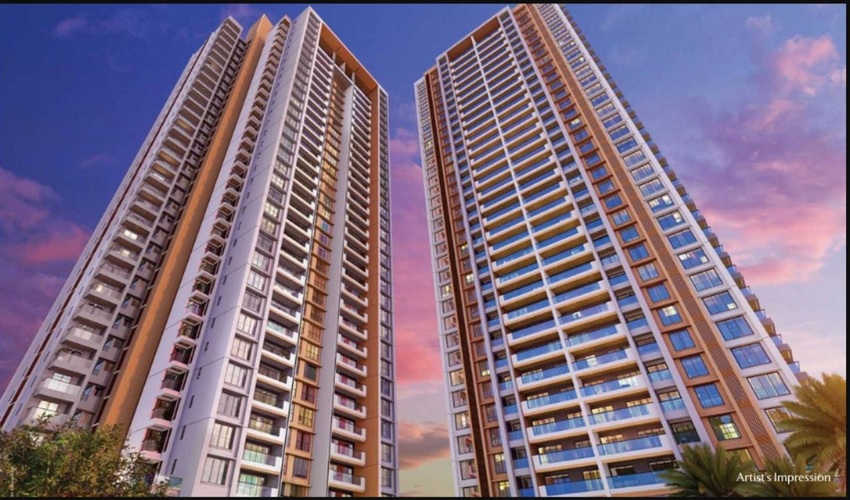
24K Manor is one of the premium residential projects in Pimple Nilakh, offering 3 and 4 BHK configurations. Investors considering the project should evaluate the current unit price, carpet area, construction status, expected possession, achievable rent and total acquisition cost rather than relying on locality-level appreciation assumptions.
For the complete project analysis, see our 24K Manor buyer guide.
Investor Due-Diligence Checklist
Before purchasing a property in Pimple Nilakh for investment, verify:
- Current price per carpet sq ft for the specific unit, not just the locality average
- Total acquisition cost including stamp duty, registration and brokerage
- Realistic achievable rent, based on comparable leased properties
- The project's RERA registration and disclosed possession timeline
- Construction status and the developer's track record on past deliveries
- Maintenance charges and what they cover
- Competing supply in the same configuration nearby
- Your own investment horizon and holding-cost tolerance
Frequently Asked Questions
Is Pimple Nilakh good for property investment in 2026?
It depends on the specific purchase rather than the locality alone. Entry price, achievable rent, project selection and investment horizon determine the economics of an individual purchase more than the strength of the locality by itself.
What is the rental yield in Pimple Nilakh?
Published data from current listings indicates indicative gross asking yields of roughly 2-3.5% for standard properties and 3-5% for premium projects, based on asking rents against asking prices rather than achieved-yield figures from actual leases. Calculate the specific yield for any unit you are evaluating using its actual price and a realistically achievable rent.
How do you calculate rental yield on a flat?
Gross rental yield equals annual rent divided by property purchase price, multiplied by 100. This does not account for maintenance, vacancy, brokerage, repairs, property tax or financing costs, all of which reduce the net return.
What drives rental demand in Pimple Nilakh?
Rental demand is primarily linked to proximity to the Hinjewadi and Baner-Balewadi employment corridors. Demand for a specific unit also depends on its configuration, project quality and how much comparable rental supply exists nearby at the same time.
Can property prices in Pimple Nilakh continue to rise?
There is no way to predict this with certainty. Prices are influenced by entry valuation, new supply, infrastructure completion, broader Pune market conditions and credit conditions. Past price trends are not a guarantee of future performance.
What are the risks of investing in Pimple Nilakh?
Key risks include overpaying relative to comparable inventory, rental yield compression, under-construction and possession-timeline risk, competition from new supply, vacancy periods, transaction costs, and treating planned infrastructure as guaranteed rather than uncertain.
Is a ready-to-move or under-construction property better for investment?
Each carries different trade-offs. A ready property can generate rent immediately but is typically priced higher, while an under-construction property may offer a lower entry price but carries possession-timeline and execution risk along with holding costs before completion.
What should investors check before buying in Pimple Nilakh?
Price per carpet sq ft, total acquisition cost, realistic achievable rent, RERA registration and disclosed timeline, construction status, developer track record, maintenance costs, and competing supply in the same configuration. See the due-diligence checklist above for the full list.
Is 24K Manor suitable for investment?
That depends on the specific unit's price, carpet area, construction status, expected possession and achievable rent, evaluated against total acquisition cost, rather than on locality-level appreciation assumptions. See our 24K Manor buyer guide for project-specific details.
Conclusion
Pimple Nilakh has characteristics that may make it relevant to long-term property investors, including access to major West Pune employment corridors and an established residential market. But locality strength alone does not determine investment performance. Entry price, achievable rent, project selection, holding costs and investment horizon ultimately determine the economics of an individual purchase.
Investors should therefore evaluate a specific property using current price and rental data rather than relying on historical appreciation or projected infrastructure benefits.