Luxury Apartment Amenities: A Practical Checklist for Homebuyers
By The 24K Lifestyle Team | Last Updated: October 19, 2026
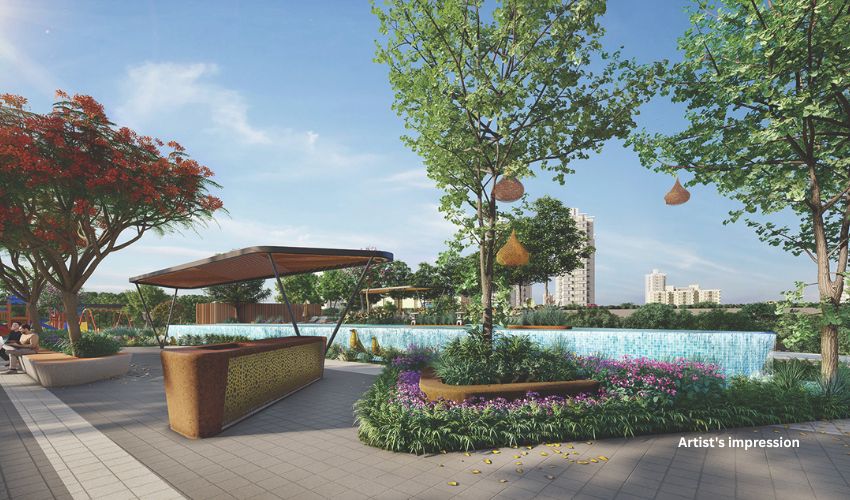

Table of Content
Luxury apartment amenities extend well beyond a swimming pool and clubhouse. Homebuyers increasingly evaluate how residential developments support fitness, wellness, work, security, sustainability, family life and everyday convenience.
But a longer amenities list does not automatically make a project better. What matters is whether those facilities are well planned, appropriately sized for the number of residents, easy to access and practical to maintain. This guide covers 12 amenities worth evaluating when comparing luxury apartments, along with the questions buyers should ask before making a decision.
Luxury Apartment Amenities at a Glance
| Amenity | What to Evaluate |
|---|---|
| Fitness centre | Equipment, ventilation, capacity |
| Swimming pool | Size, maintenance, children's area |
| Wellness spaces | Yoga, spa, steam/sauna where provided |
| Landscaped open spaces | Usable area, shade, walking routes |
| Sports facilities | Courts, indoor/outdoor options |
| Children's areas | Age suitability and safety |
| Clubhouse/social spaces | Capacity and actual usability |
| Co-working spaces | Wi-Fi, privacy, meeting facilities |
| Smart-home features | Useful automation vs gimmicks |
| Security | Access control, CCTV, visitor management |
| EV charging | Number of charging points/provision |
| Sustainability | Water, waste and energy systems |
1. Fitness Centre & Wellness Spaces
A well-planned fitness and wellness offering covers more than a single equipment-filled room. Look for adequate equipment variety, proper ventilation and natural light, dedicated space for yoga or meditation, and separate changing facilities. Some developments include additions such as a spa, steam room or sauna, and in a few cases specialised features like cryotherapy rooms, but these remain occasional additions rather than a standard expectation, so it's worth confirming what a specific project actually offers rather than assuming a fixed list. The more useful question is whether the space is sized appropriately for the number of residents it serves.
For more on how wellness design is shaping Pune's luxury apartments, see our guide to wellness-centric homes.
2. Swimming Pool & Leisure Deck
A swimming pool remains one of the most consistently expected amenities in premium residential developments. Beyond the pool itself, evaluate the surrounding leisure deck, including seating, shade and changing facilities, and whether a separate children's pool is provided where families make up a significant part of the resident mix. Ongoing water quality and maintenance matter as much as the pool's size or design.
3. Landscaped Gardens & Walking Spaces
Landscaped open spaces serve a practical role: they give residents room to walk, sit outdoors and gather away from vehicular traffic. Evaluate the actual usable area rather than only the total green cover quoted in marketing material, along with shaded seating and the quality of walking paths. These spaces contribute to everyday recreation and outdoor comfort, rather than functioning as a guaranteed driver of health outcomes or property value.
4. Clubhouse & Social Spaces
A clubhouse typically houses a multipurpose hall, lounge areas, indoor games and space for residents to gather for events. Its usefulness depends heavily on capacity relative to the size of the development. A clubhouse designed for a few hundred residents will feel very different in a project with several thousand. Ask whether the space is shared across multiple towers or phases, and how bookings are managed.
5. Sports & Recreation Facilities
Sports facilities vary widely by project and can include badminton and basketball courts, tennis or squash facilities, jogging and cycling tracks, and indoor games rooms. Not every luxury development includes every sport, so it's worth checking which facilities are actually part of a specific project rather than assuming a standard set, along with whether they are shared amenities or reserved for particular towers.
6. Children's & Multi-Generational Spaces
Family-oriented spaces should ideally serve more than one age group. This includes dedicated play areas and toddler zones for children, as well as seating and accessible pathways that work well for senior residents. Multi-generational households benefit most from developments that plan for both ends of this range, rather than treating children's play as the only family-focused amenity.
7. Co-working & Business Facilities
Hybrid work has made in-building co-working and business facilities a legitimate design consideration rather than a novelty. Useful features include reliable Wi-Fi, private booths or cabins for calls, and meeting or conference rooms with functioning audio-visual setup. Additional services such as document handling or dedicated business concierge support exist in some developments, but these should be confirmed against what a specific project actually provides rather than assumed as standard.
8. Smart Home & Building Technology
Smart home features are increasingly common in new luxury developments, but it helps to focus on what buyers can practically verify rather than marketing language. This includes video door phones, smart locks, app-based access control, lighting and climate controls within the apartment, and automation in common areas such as lobbies and parking. For a fuller breakdown of what's realistic to expect, see our guide to smart home features in Pune's luxury apartments.
9. Security & Access Control
Security deserves evaluation separately from concierge or lifestyle services, since it addresses a different set of needs. Key elements include gated and access-controlled entry points, CCTV coverage across common areas, a visitor management process, and fire and life-safety systems. Some developments also offer biometric or facial-recognition entry, but this remains one option among several rather than a universal requirement. What matters most is that access control is consistently enforced across every entry point.
10. EV Charging & Future-Ready Parking
EV charging has become a meaningful consideration for many buyers, but provision varies significantly between projects. Rather than assuming charging automatically benefits resale or rental value, check the number of charging points available, whether they are dedicated or shared, the building's electrical capacity to support them, and how visitor parking is handled alongside resident parking.
11. Sustainability & Resource Management
Sustainability features are increasingly part of mainstream premium-residential planning rather than a niche add-on. Common elements include rainwater harvesting, sewage treatment plants, waste segregation systems, energy-efficient lighting in common areas, and solar power for shared facilities where implemented. These systems affect the practical running of a building, including water availability, waste management and common-area electricity costs, more directly than they affect any single unit's resale value.
12. Pet-Friendly & Everyday Convenience Amenities
Daily usability often gets less attention than headline amenities, but it matters just as much to residents. Depending on the project, this can include designated pet areas, secure parcel and delivery collection points, adequate visitor parking, bicycle parking, and convenience retail within or near the development. These features rarely appear in marketing highlights, but they shape how comfortable day-to-day living actually feels.
How Should You Evaluate Amenities Before Buying a Luxury Apartment?
A long amenities list is easy to print in a brochure. Before treating any of it as a deciding factor, it helps to ask a few direct questions.
- Will you actually use it? A rooftop lounge or golf simulator might matter enormously to one buyer and be irrelevant to another. Weigh amenities against your own lifestyle rather than the length of the list.
- Is the amenity appropriately sized? A small gym serving several hundred apartments is not equivalent to a well-planned fitness centre built for that resident count. Scale matters as much as the feature itself.
- Is it operational or only proposed? Confirm what is actually delivered and functioning today, versus what is still under construction or planned for a future phase.
- What will it cost to maintain? A larger amenities package usually means higher recurring maintenance charges. Ask how amenity costs are reflected in the maintenance fee.
- Is access included? Some facilities require additional usage charges, membership or advance booking. Check whether an amenity is genuinely included or comes with separate costs.
- Is it documented? Amenities shown in marketing material should be cross-checked against the project's sanctioned plans and relevant MahaRERA disclosures, where applicable, rather than taken at face value.
Standard Amenities vs Luxury Amenities: What's the Difference?
| Standard residential amenity | Premium/luxury execution |
|---|---|
| Gym | Larger fitness/wellness facility |
| Pool | Pool + leisure deck / children's pool |
| Garden | Landscaped usable outdoor spaces |
| Community hall | Multi-purpose clubhouse/social spaces |
| Security desk | Layered access and visitor management |
| Parking | EV-ready / better visitor provision |
| Children's play | Age-segmented family recreation |
| Basic common areas | Lounges/co-working/social spaces |
The distinction is not defined by any single amenity. Project quality depends on design, execution, maintenance and overall residential experience.
Do More Amenities Always Mean a Better Luxury Project?
Not necessarily. A long amenities list can look impressive, but buyers should focus on quality, accessibility, maintenance and how well facilities match the number and profile of residents. A smaller set of well-designed, regularly used amenities may provide greater everyday value than numerous facilities that are difficult or expensive to maintain.
Explore Amenities Across 24K Projects
Amenity mixes differ across 24K developments. Buyers can explore the individual project pages for current facilities, configurations and project details.
- 24K Altura, Baner
- 24K Manor, Pimple Nilakh
- 24K Stargaze, Bavdhan
- 24K Espada, Life Republic, Hinjewadi
If you're comparing configurations alongside amenities, explore our guides to luxury flats in Pune, 3 BHK flats in Pune and 4 BHK flats in Pune.
FAQs
Q1. What exactly is a luxury apartment?
There is no official grade for a luxury apartment. The term usually describes a home with a higher specification, more space and privacy, and a wider set of well-maintained shared amenities than a standard apartment. Sellers also call such homes premium, high-end or upscale, and none of these terms is an official grade, so compare the actual carpet area, specification and amenities instead of relying on the label.
Q2. What are the most important amenities in a luxury apartment?
The amenities buyers evaluate most consistently include fitness and wellness spaces, a swimming pool, usable open spaces, a clubhouse, security and access control, family and recreational zones, smart home features, EV-ready parking, and sustainability systems. The value of each depends on how well it is planned and maintained, not just whether it exists.
Q3. What should I check before comparing apartment amenities?
Look at usability and capacity relative to the number of residents, ongoing maintenance, any additional access or usage charges, whether the amenity is actually delivered or still planned, and whether it is documented in the project's official disclosures.
Q4. Do more amenities always make an apartment project better?
No. Quality and usability matter more than the number of facilities. A long amenities list does not guarantee that the facilities are well designed, appropriately sized or properly maintained.
Q5. Are EV charging points important in modern apartment projects?
They are increasingly relevant for EV owners and for future-ready parking, but availability, the number of charging points and a building's electrical capacity vary by development, so it's worth confirming specifics rather than assuming provision.
Q6. What is the difference between standard and luxury apartment amenities?
The difference usually comes down to execution and scale rather than the presence of any single feature, for example a fitness corner versus a full wellness centre, or a community hall versus a multi-purpose clubhouse. Quality of design and maintenance matters as much as what is on the list.
Q7. How can buyers verify the amenities promised by a project?
Check official project documentation, sanctioned plans and applicable MahaRERA disclosures, and confirm with the developer which amenities are currently operational versus planned.
Conclusion
Luxury apartment amenities are best judged by quality and usability, not by how long the list looks in a brochure. If wellness, security, sustainability or everyday convenience matters most to you, the amenities worth paying attention to are the ones that are well planned, properly maintained and genuinely accessible to the residents who will use them every day. Use the checklist above to compare projects on that basis, and verify what's promised against actual project documentation before you decide.